
A FreeBuf article published November 9, 2026 reports on four consecutive days of traffic to an internet-facing cross-border business protected by a self-developed web application firewall (WAF). The author describes the results qualitatively; the article does not provide request totals, measured detection rates or false-positive rates.
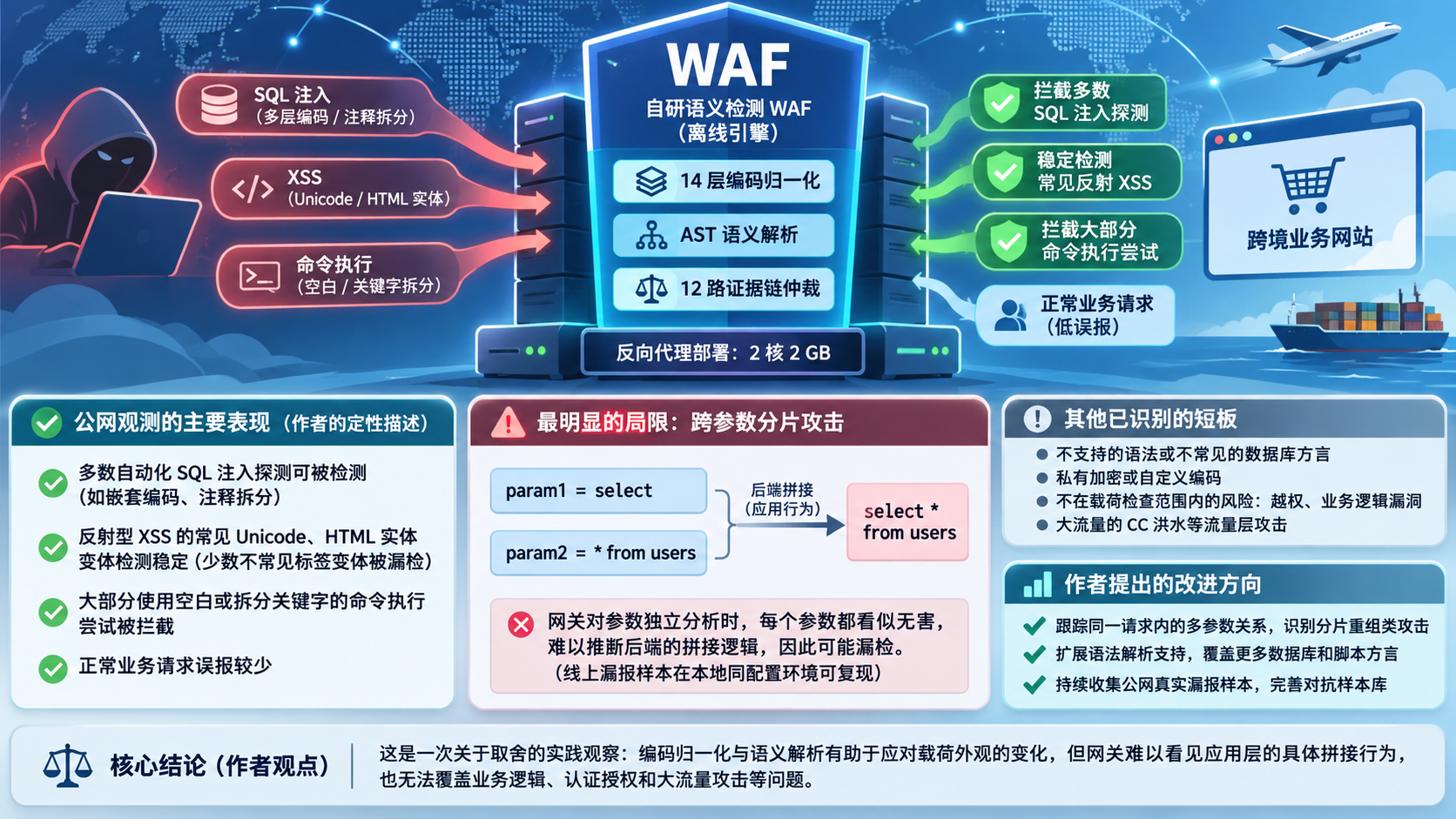
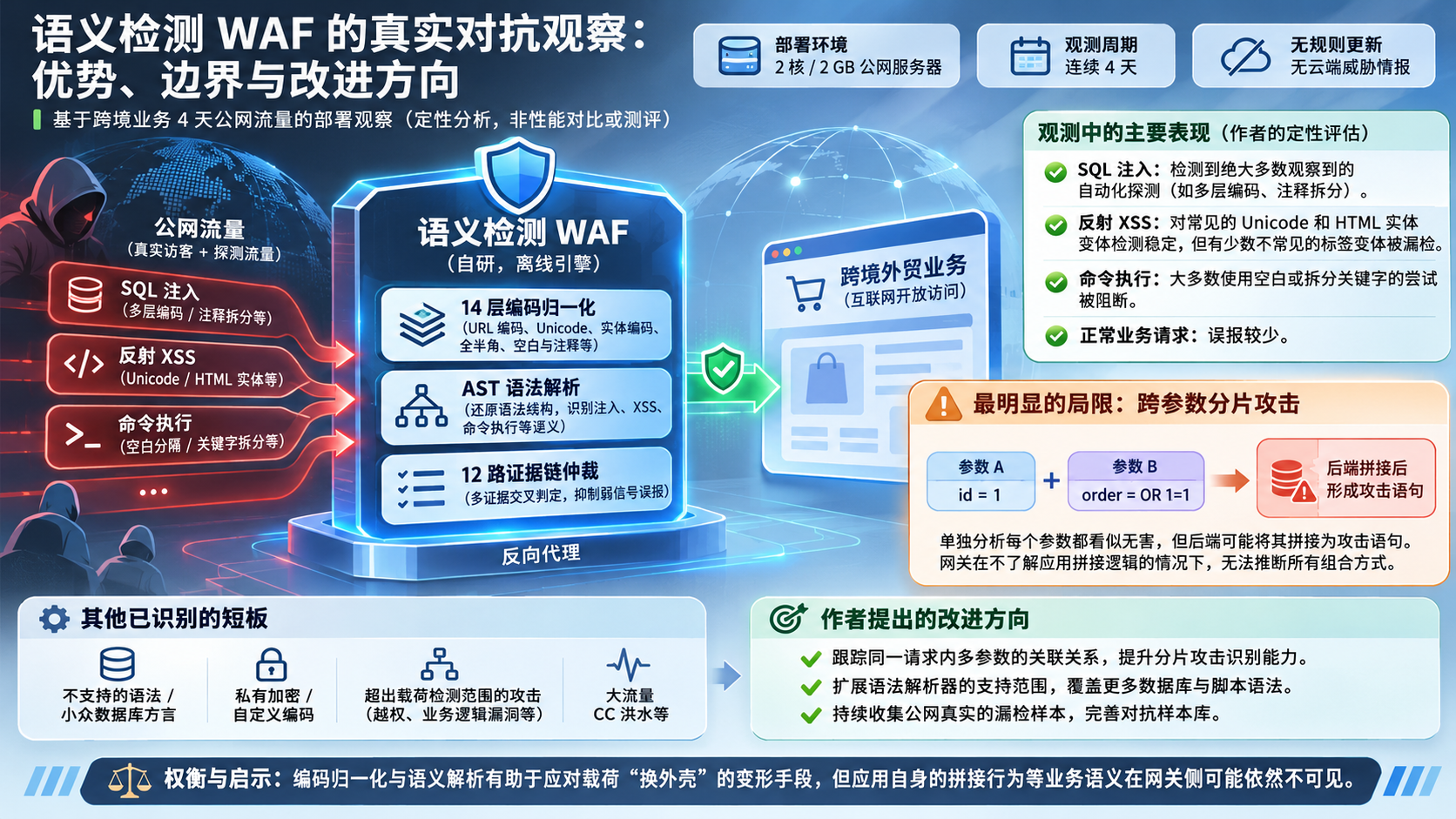
The WAF ran on a two-core, 2 GB public server as a reverse proxy. According to the author, its offline detection pipeline uses 14 layers of encoding normalization, abstract syntax tree (AST) parsing and arbitration across 12 independent evidence paths. It received no rule updates or cloud threat intelligence during the observation period. The primary observations came from live visitor and probing traffic; a local test environment with the same engine version and configuration was used to investigate missed detections.
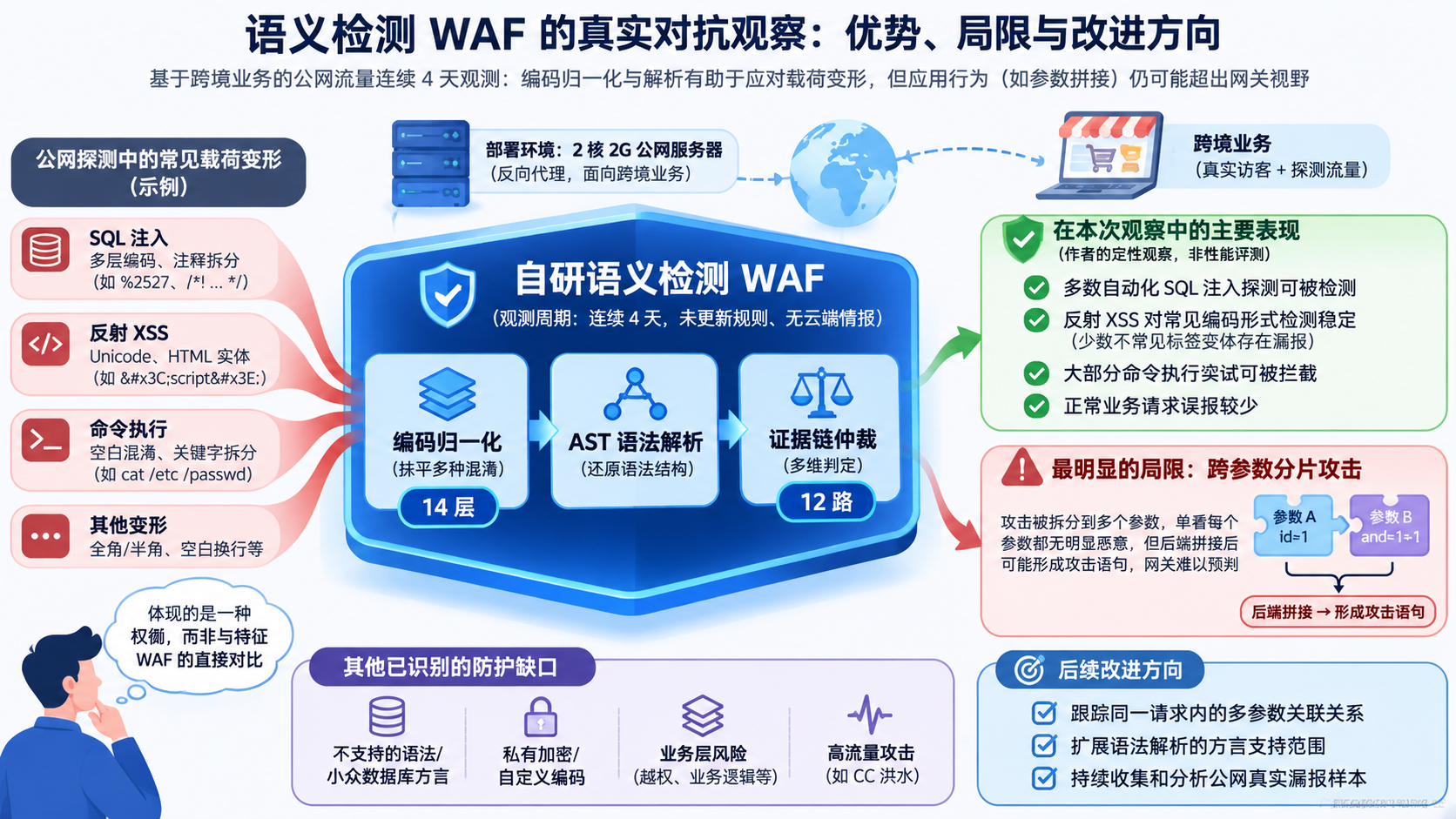
The author reports that the system detected most observed automated SQL-injection probes using nested URL encoding or comments to split keywords. Detection of reflected cross-site scripting was described as stable for common Unicode and HTML-entity variants, though some less common tag variants were missed. Most observed command-execution attempts using whitespace or split keywords were blocked. Normal business requests were reported to have few false positives. These are the author’s assessments, not published performance measurements.
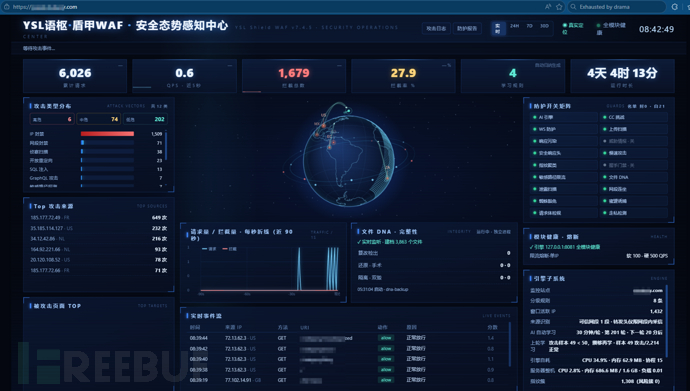
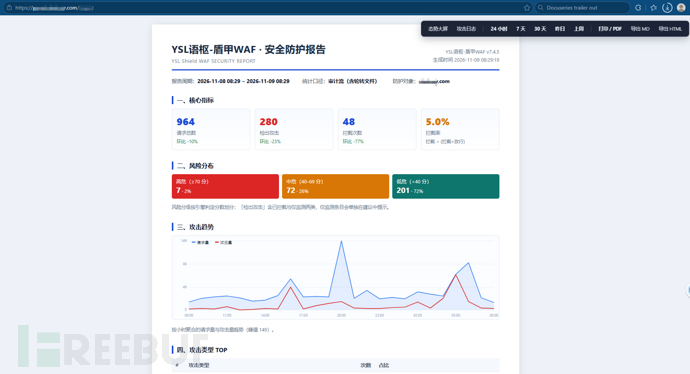
The clearest limitation appeared when an attack was split across parameters. Each parameter looked harmless when analyzed alone, but the backend application could concatenate them into an attack-bearing statement. The author says missed samples captured in public traffic produced the same result in the local test environment. A gateway that parses parameters independently cannot infer every application-specific concatenation step.
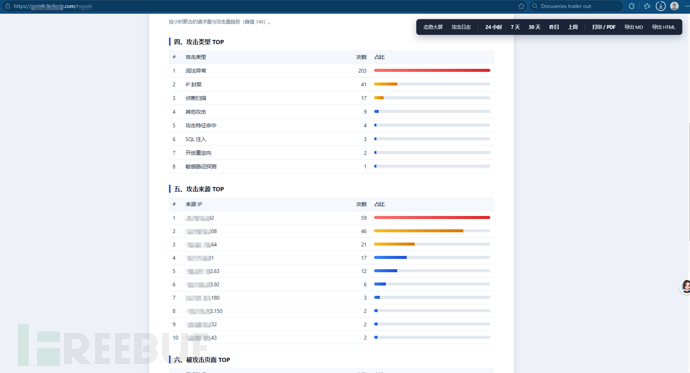
The article also identifies gaps involving unsupported syntax or uncommon database dialects, private encryption or custom encodings, and attacks outside payload inspection altogether—including authorization flaws, business-logic vulnerabilities and high-volume traffic floods. The author proposes tracking relationships among parameters in the same request, expanding parser support and collecting more real-world missed samples.
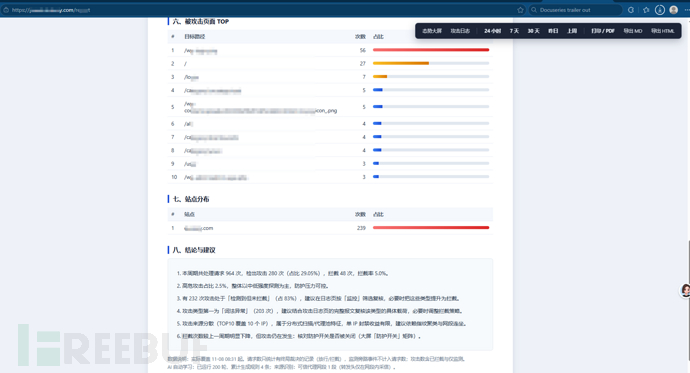

This account illustrates a trade-off rather than a head-to-head performance test against a signature-based WAF: normalization and parsing may help with changes to a payload’s appearance, while application behavior can remain invisible to the gateway. The observations were made on an authorized business deployment, with reproduction in an authorized test environment.
Source: freebuf.com (originally published 2026-11-09 09:25 UTC+8)