Originally reported by InfoQ on November 16, 2026.
DeepSeek announced on November 13 that developers can access more of the capabilities used in its app and website through its API. The additions include managed web search and page reading, file input, and separate interfaces for search, page fetching, OCR, speech recognition and text-to-speech. DeepSeek says the tools can help developers build a conversational experience similar to its official app; that is a company claim, not a guarantee that every app will behave identically.
Developers can declare deepseek_web_search and deepseek_read_url in an API request. DeepSeek’s service then handles the search or page retrieval when the model decides it is needed. According to its documentation, the model can make roughly 20 tool calls in thinking mode, including searches, opening pages and finding content within them. Responses retain tool records and citations, which developers must display and pass back as required in later conversation turns.
File input follows a different process: developers upload a PDF, Word document, PowerPoint file or image through the Files API, then add the returned file ID to a conversation. DeepSeek offers text-only and mixed text-and-image parsing, but says the latter may miss some charts and that extracted images consume input tokens. The application-layer features are currently specified for the V4.1-Flash model.
The trade-off is control. With managed search or page reading enabled, developers cannot use tool_choice to force either tool; the documentation says doing so returns a 400 error. DeepSeek also does not currently provide domain allowlists or blocklists for managed search. Under certain managed-tool or safety settings, the service ignores some supplied generation or tool-control parameters. Teams that must restrict sources or dictate search steps can instead use the separate Search and Fetch interfaces or maintain their own tool workflow. DeepSeek had already opened its Search and Fetch APIs on October 17; the November announcement brings those capabilities more directly into model conversations.
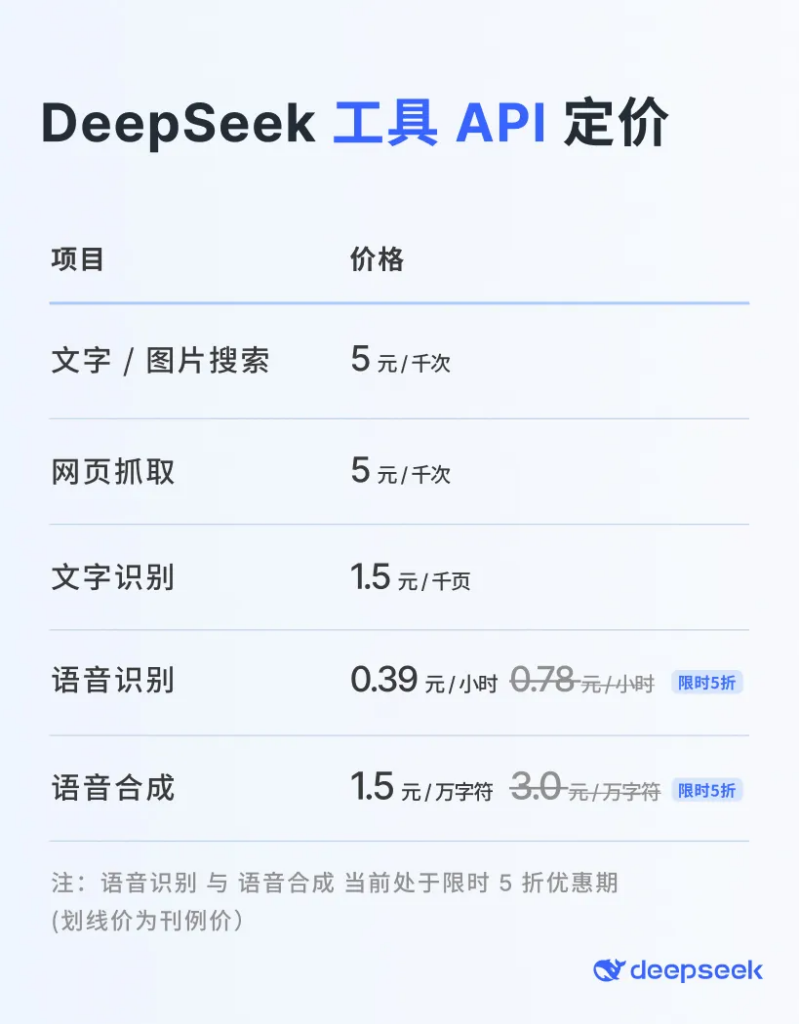
DeepSeek says tool calls are billed in addition to token usage. The InfoQ report cites a user comparison putting DeepSeek web search at 5 yuan per 1,000 calls, versus $10 per 1,000 calls for comparable OpenAI and Anthropic tools. These figures use different currencies and come from a user comparison, rather than a like-for-like cost assessment in the article.
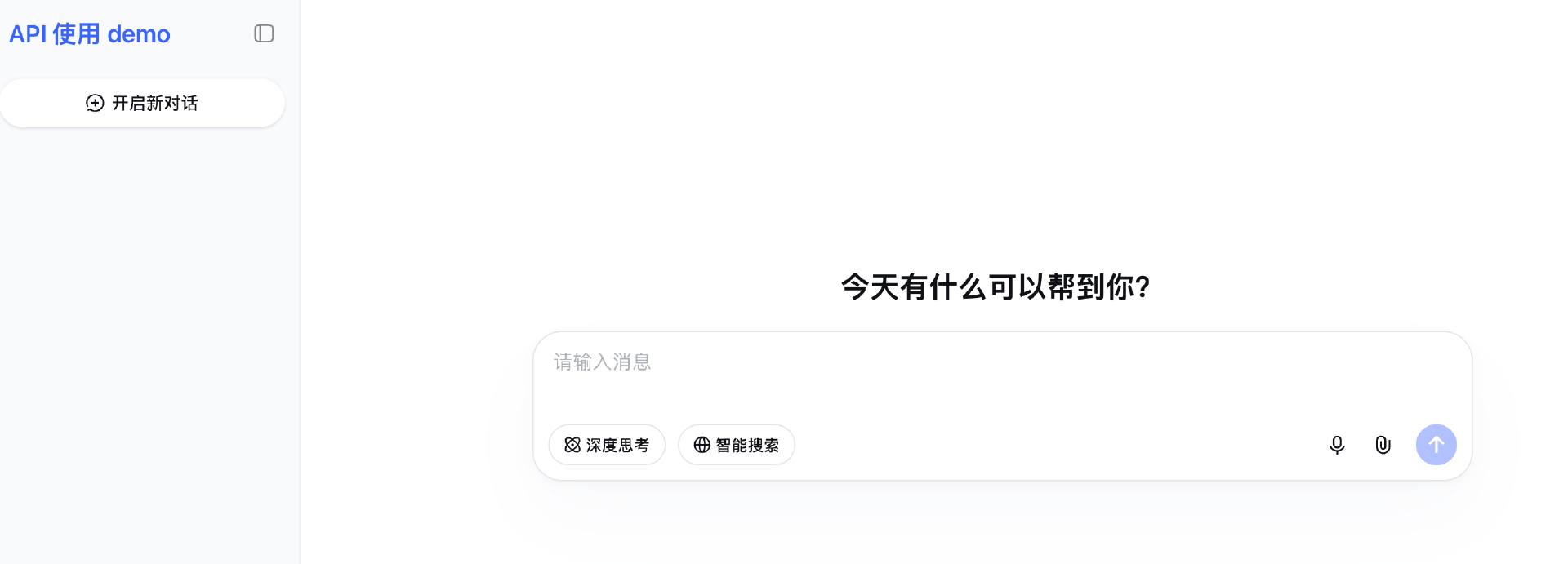
DeepSeek has also published a chat-demo project showing search, file input and voice interaction. As InfoQ notes, other model providers already offer managed tools, though their file-handling approaches differ: OpenAI’s file search is oriented toward retrieving from an uploaded knowledge base, while the DeepSeek feature described here parses files and adds their contents to model context.
Source: infoq.cn (originally published 2026-11-16 14:38 UTC+8)