Originally reported by InfoQ on November 10, 2026.
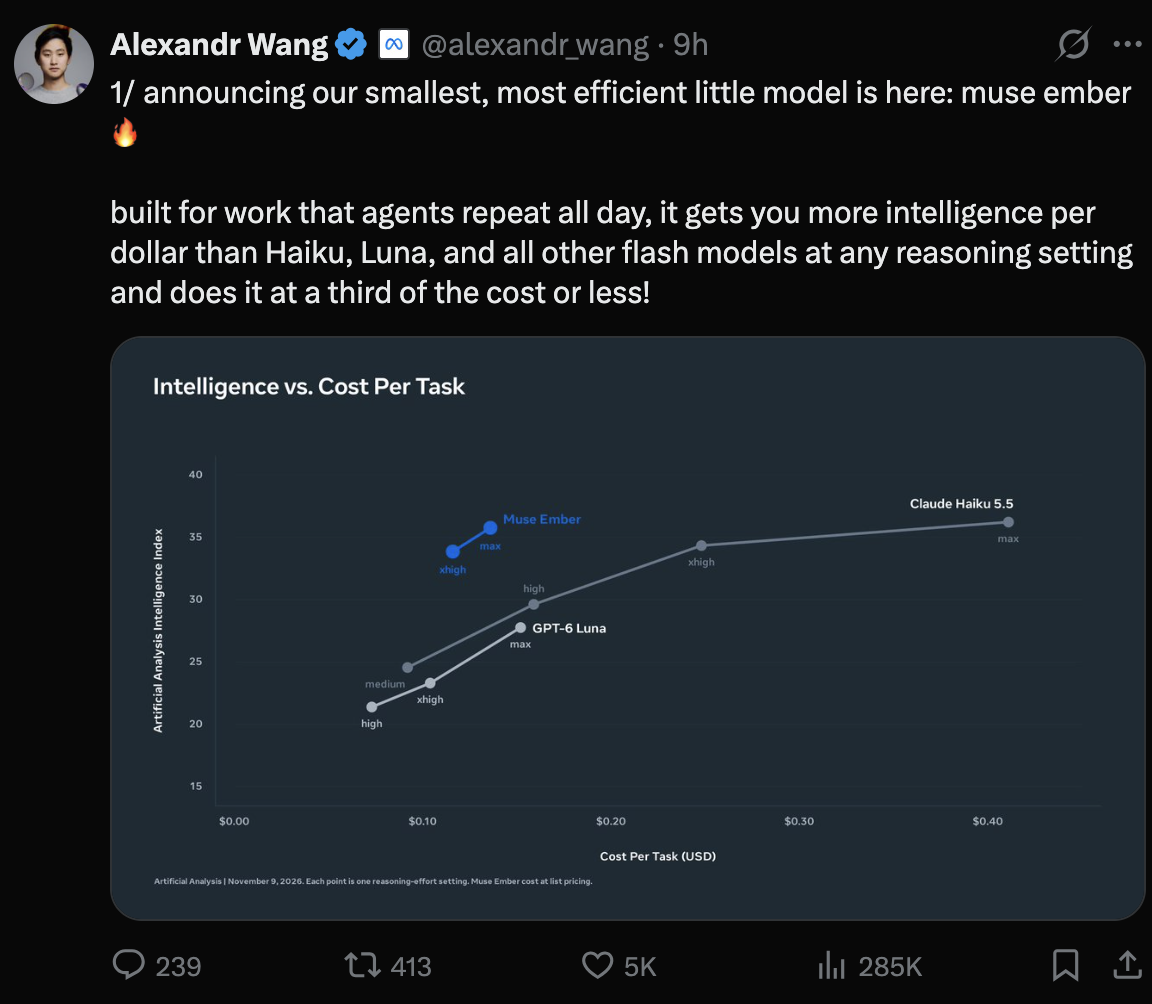
Meta has released Muse Ember, a smaller AI model designed for repetitive agent work such as tool calls, coding subtasks, information extraction and document analysis. Rather than positioning it as a replacement for its most capable models, Meta says developers can pair it with Muse Wonder, using Wonder to plan difficult tasks and Ember to carry out frequent operations.
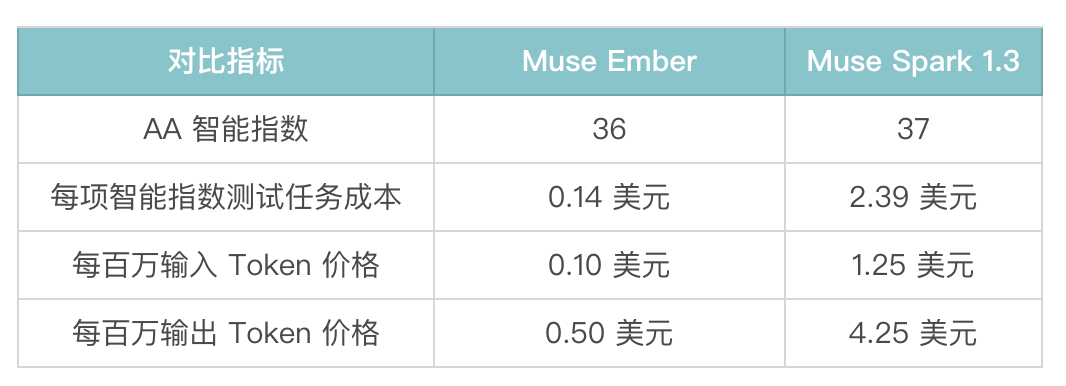
Meta says Muse Ember, available as muse-ember-1.0 through Meta Model API and Muse Code, has a 1 million-token context window and supports text, image, audio and video understanding. Its published API prices are $0.10 per million input tokens, $0.004 per million cached input tokens and $0.50 per million output tokens.
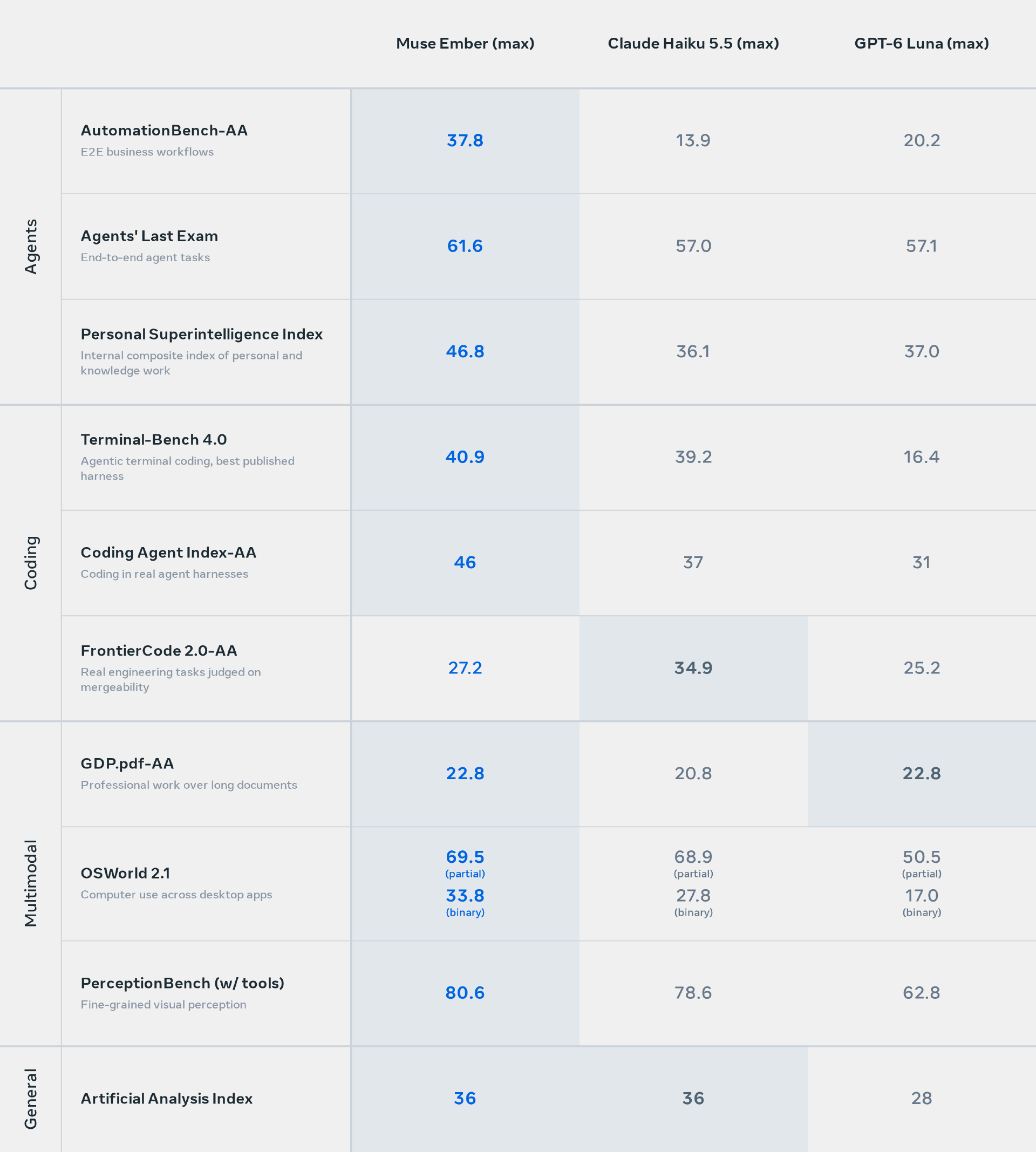
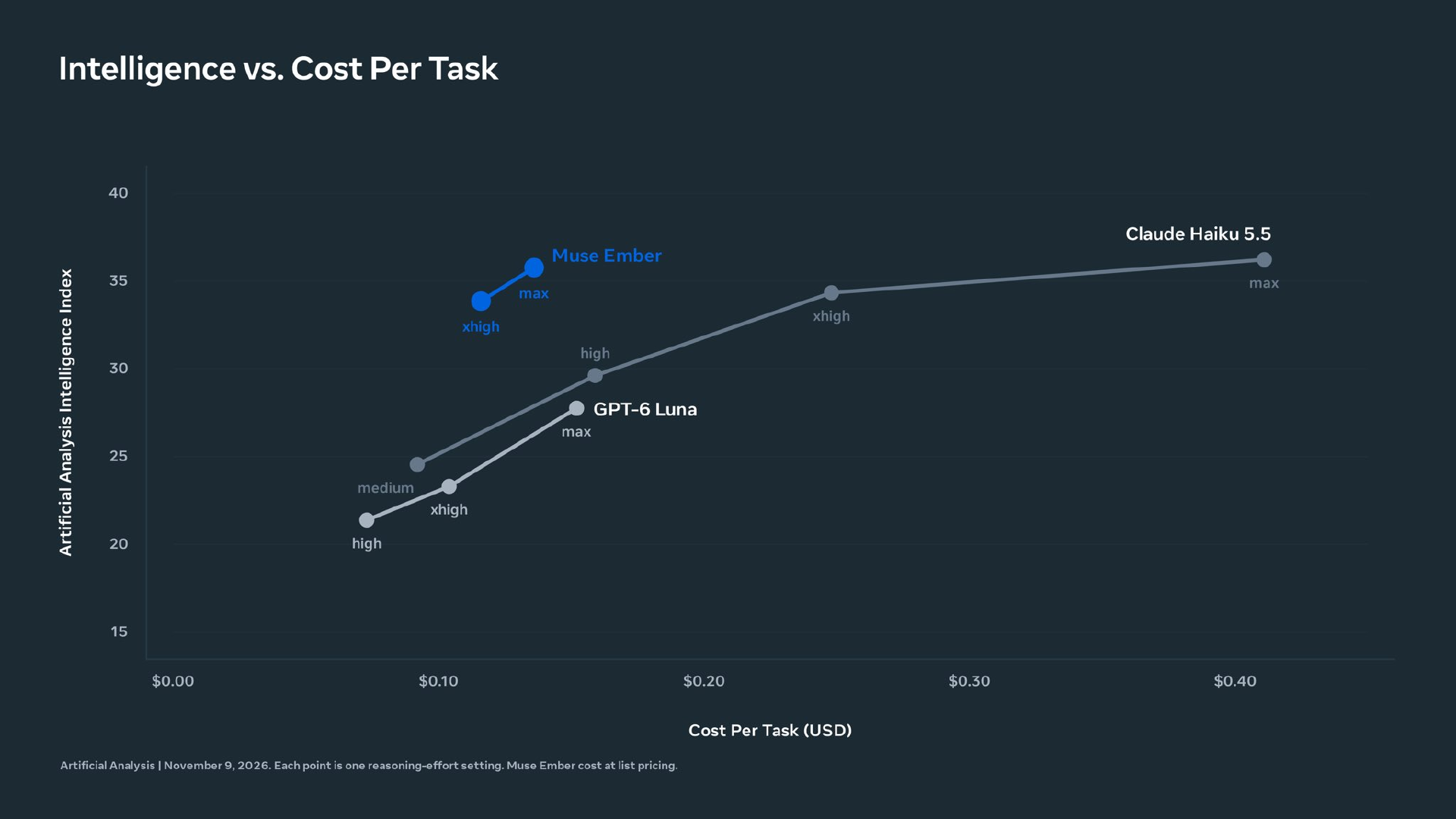
The cost comparison rests on benchmark results presented by Meta. In its account of Artificial Analysis testing, Muse Ember scored about 36 at its highest reasoning setting—level with Claude Haiku 5.5 and above GPT-6 Luna’s 28. Meta put per-task costs for comparable top-scoring configurations at about $0.136 for Ember and $0.411 for Haiku 5.5. These figures describe the reported test configurations, not a guaranteed cost for every workload.
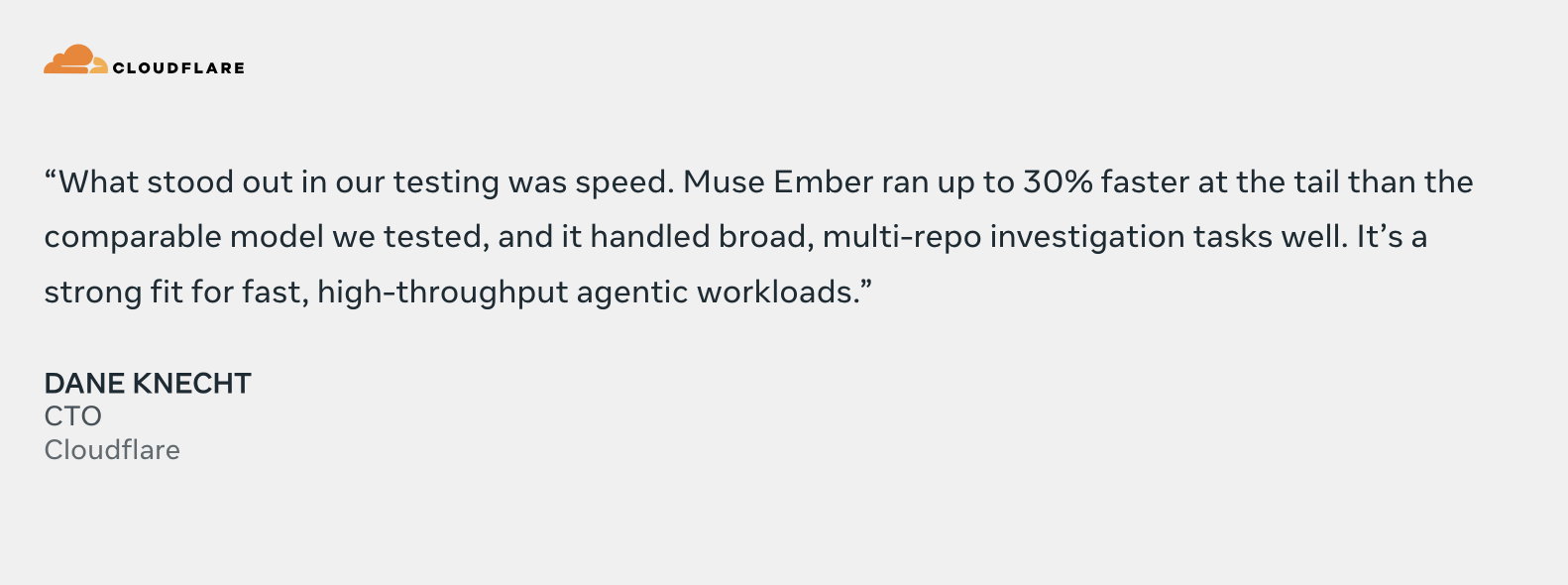
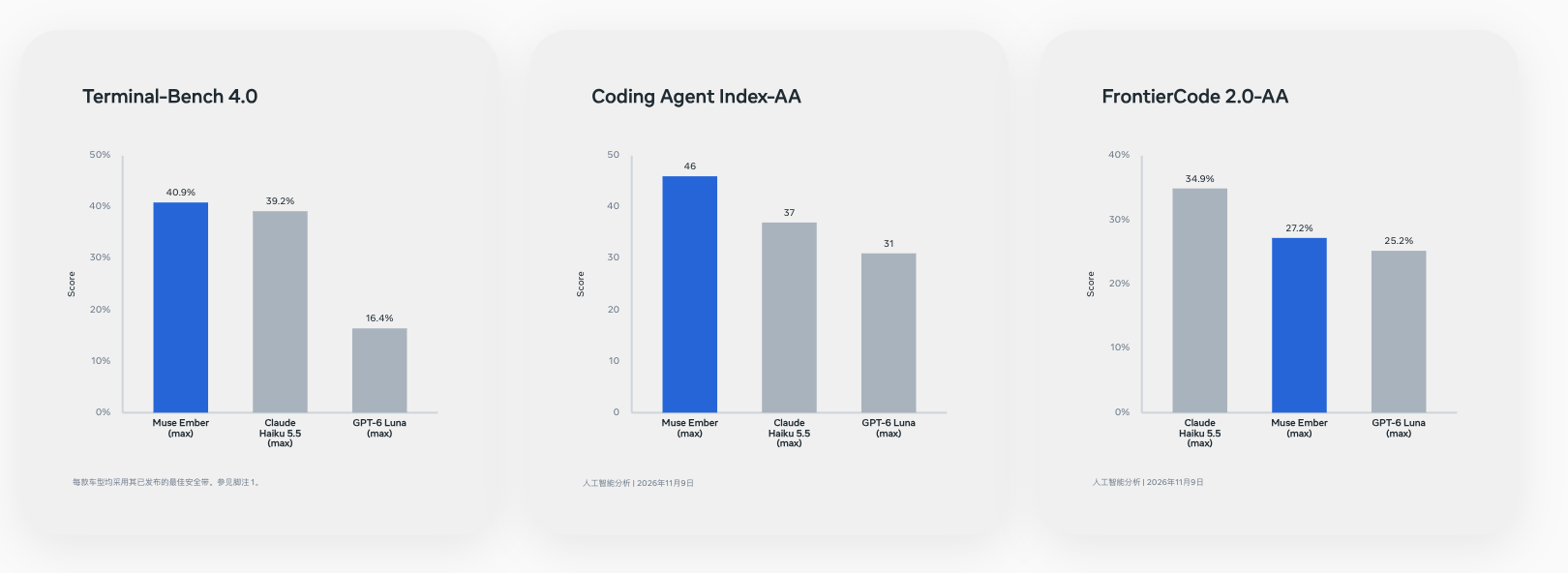
Meta’s published results also show limits to Ember’s performance. It scored 40.9% on Terminal-Bench 4.0, compared with 39.2% for Claude Haiku 5.5, but trailed Haiku on FrontierCode 2.0-AA, 27.2% to 34.9%. Partners including Cloudflare and You.com reported favorable latency in their own early tests; those claims should not be read as universal performance results.
For developers, the practical question is whether a lower-cost model can handle enough routine steps to reduce the total cost of an agent workflow while more demanding tasks remain with a stronger model.
Source: infoq.cn (originally published 2026-11-10 15:22 UTC+8)