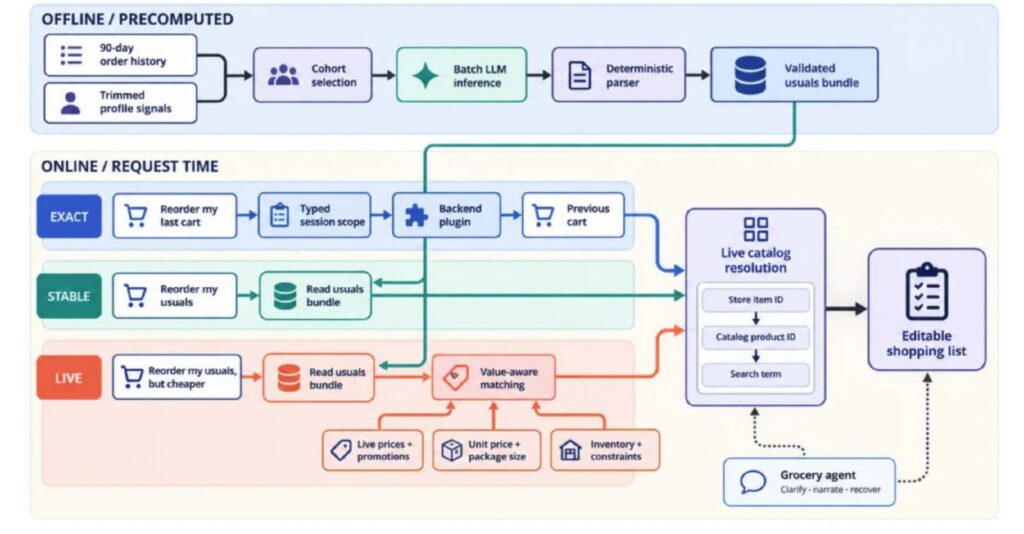
DoorDash says its Ask DoorDash shopping assistant cut the wait for a grocery reorder list from about 16 seconds to 2. Instead of analyzing a shopper’s purchase history each time they request a list, the assistant identifies likely repeat purchases in advance and matches them to the current catalog when the shopper asks. DoorDash reports that list views doubled and the order rate for the reorder flow rose by about 34%.
To prepare a list, DoorDash runs a large language model in batches, using 90 days of purchase history and information from the shopper’s profile to identify items they are likely to buy again. Deterministic checks validate the model’s output before the system stores it for reuse.
When the shopper requests the list, the assistant first looks for the item from the original store. If that fails, it tries a catalog item identifier, then a search term. This sequence lets the assistant account for changed listings and out-of-stock items without repeating the purchase analysis.
DoorDash engineer Twisha Jain described the approach on LinkedIn as a decision about which tasks need the agent to reason during a request and which can happen ahead of time. Finding a cheaper substitute still calls for the grocery agent: it weighs current prices, promotions, package sizes and stock against the shopper’s preferences. Changing a quantity or removing an item, by contrast, updates the list without another model call. According to DoorDash’s engineering account, the shopper’s edits take precedence: the agent starts its next action from the revised list, not an earlier version described in the conversation.
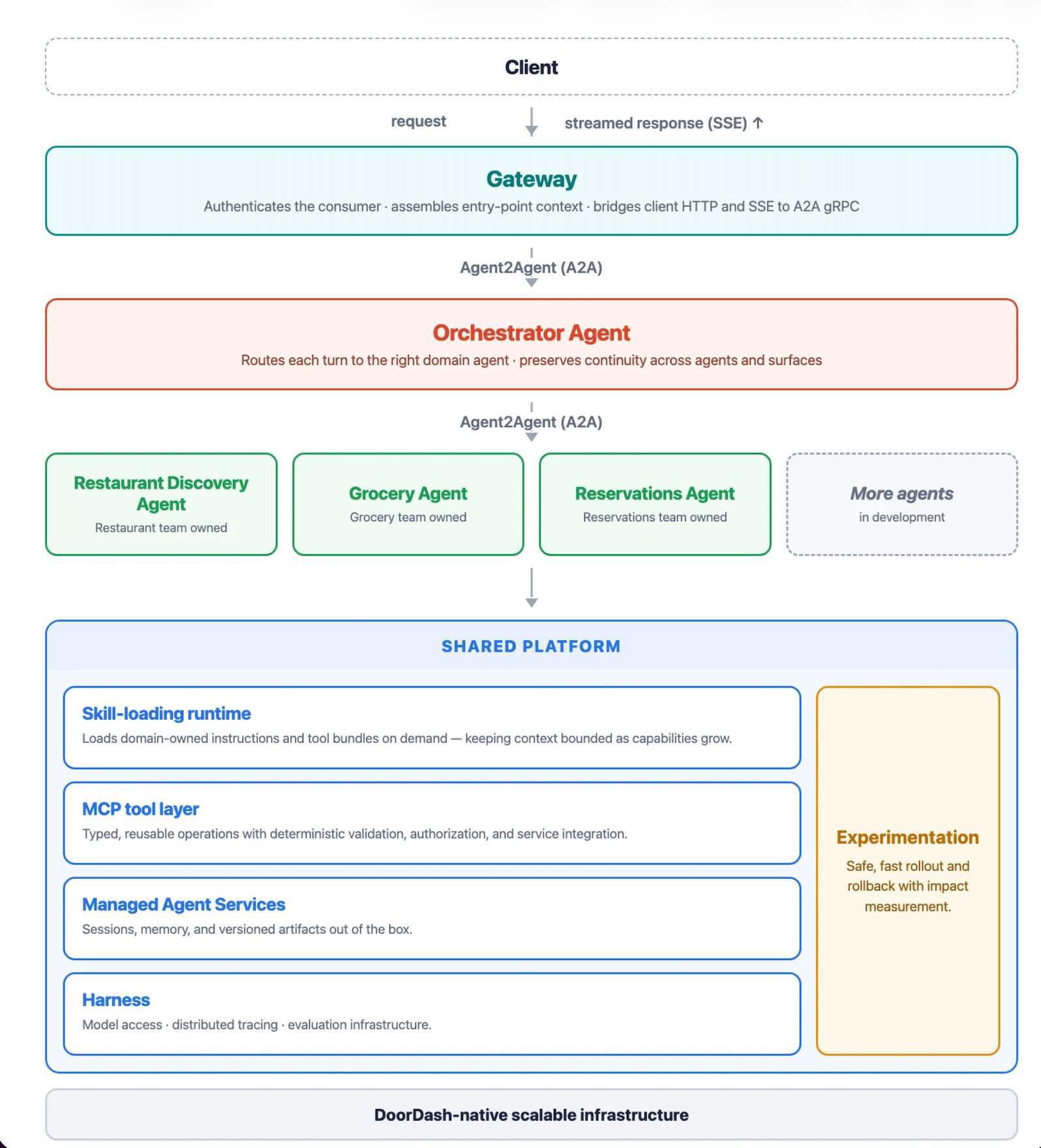
The grocery assistant runs on a shared platform that handles orchestration, memory, model access, tracing, evaluation infrastructure and rollout controls. Individual teams retain responsibility for their agents’ instructions, skills, tools and evaluation criteria. DoorDash says adding its Reservations agent took one week, roughly one-tenth the time it took to build its first domain-specific agent.