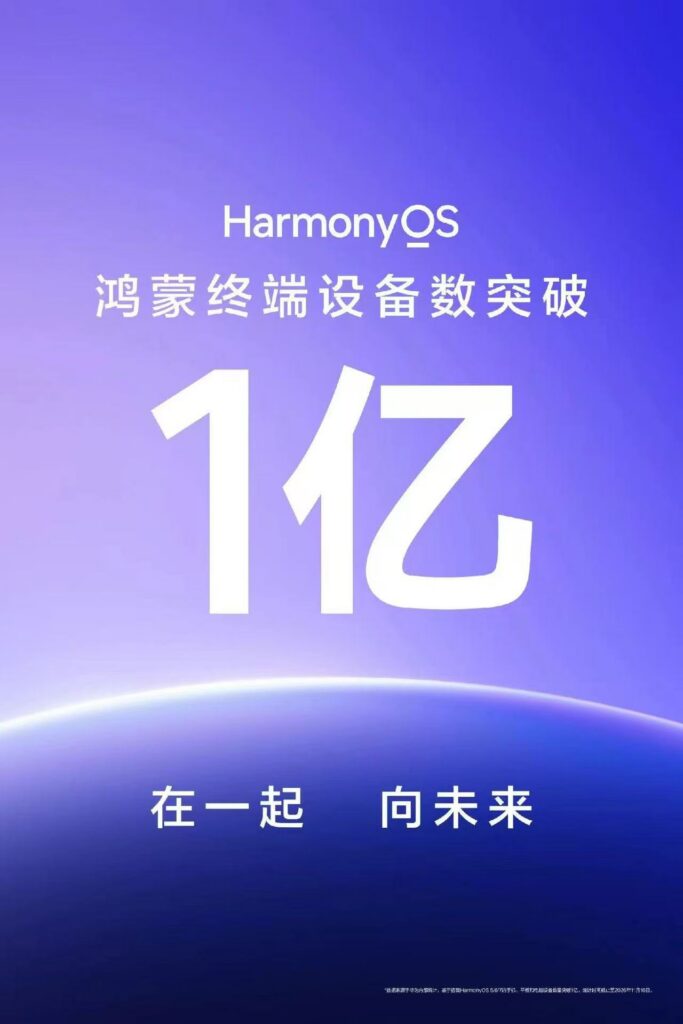
On November 24, 2026, at the launch of the HUAWEI Mate X8 and other full-scenario products, Huawei announced that HarmonyOS terminal devices had exceeded 100 million. The company said the total covers phones, tablets, computers, watches, and in-car systems.
The report traces the count from the public debut of HarmonyOS NEXT in October 2024. It says HarmonyOS 5 devices passed 10 million by the end of July 2025, a level it calls a “life-or-death line.” In November 2025, the Mate 80 series launched with HarmonyOS 6 at 27 million terminals, and the figure reached 36 million by the end of 2025.
For 2026, the same account gives 50 million at Huawei’s spring launch; more than 66 million at the June developer conference, when it describes HarmonyOS as China’s second-largest smartphone operating system; 80 million in late August; more than 90 million at the end of September with the Mate 90 series; and more than 100 million on November 24. It says the rise from 10 million to 100 million took about 15 and a half months, and that the last 20 million took about three months.
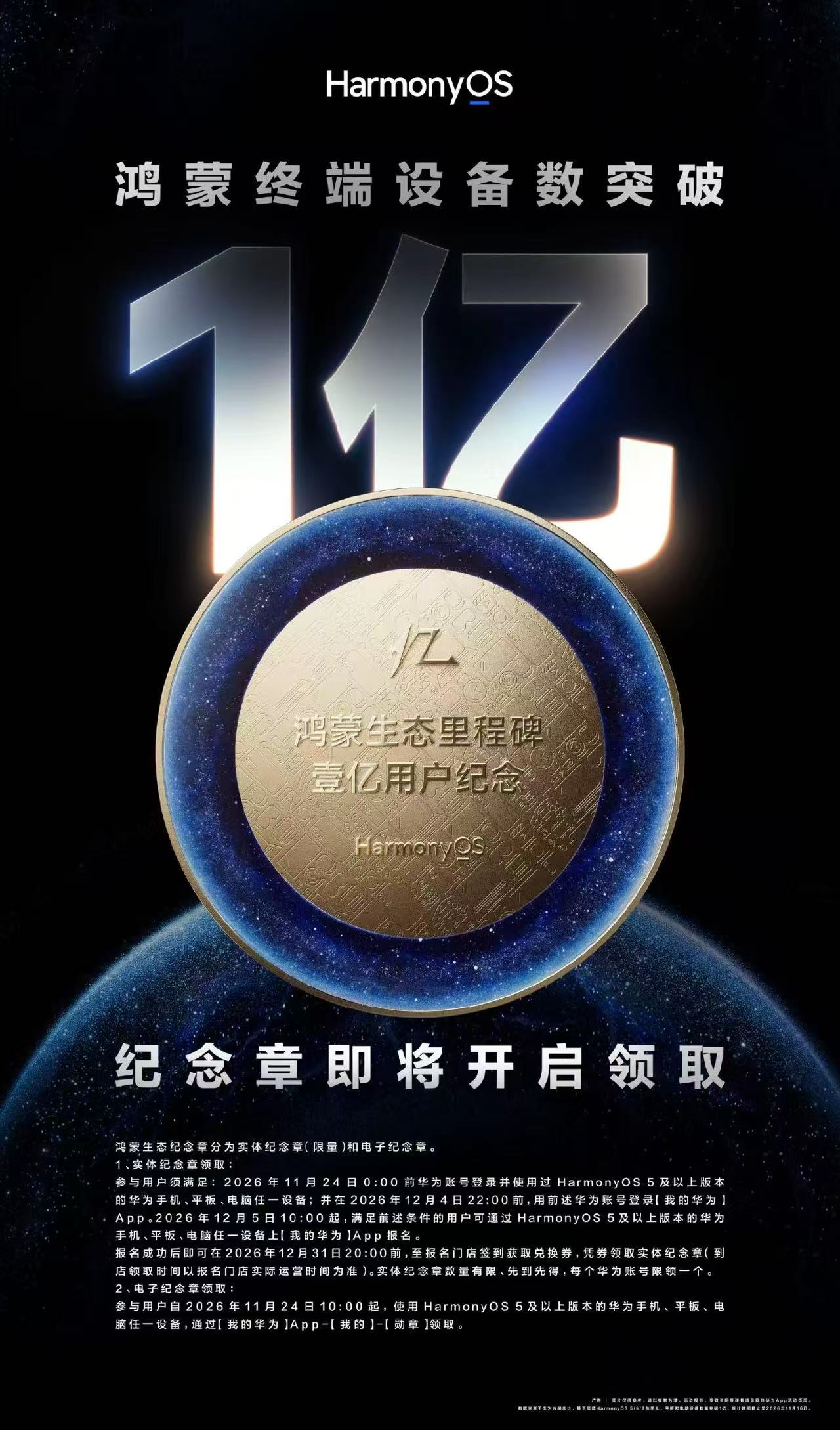
It also lists more than 450,000 apps and meta-services in Huawei’s app market, more than 21,000 apps adapted for HarmonyOS computers, more than 11 million registered developers, and more than 1.3 billion devices in the OpenHarmony ecosystem.
The article’s editors attribute the pace to long-running Huawei research, system-level features meant to differentiate everyday use, and an open base meant to move apps from basic fitness toward new functions. That is the outlet’s reading, not a separate measurement.
What the report says about the system
The article says Huawei teams began before 2019 on a self-developed microkernel, a distributed architecture, and a security base, aiming at one foundation for many device types rather than a separate system for each device. It says chips, hardware, and system software sit in the same in-house stack.
It claims smoothness has improved by about 15 percent a year with the Ark engine, a fused performance large model, and technology it calls hyperspace. It says hundreds of thousands of test cabinets run around the clock in Huawei labs, and that apps go through more than ten thousand repeated checks before release.
On HarmonyOS 7, it says on-device AI learns habits and anticipates which apps will be opened. It claims a 22 percent faster launch for mainstream, frequently used apps and 25 percent faster page changes, and says an 8 GB memory phone running HarmonyOS 7 can open twenty apps in sequence and return to the first still on its previous screen.

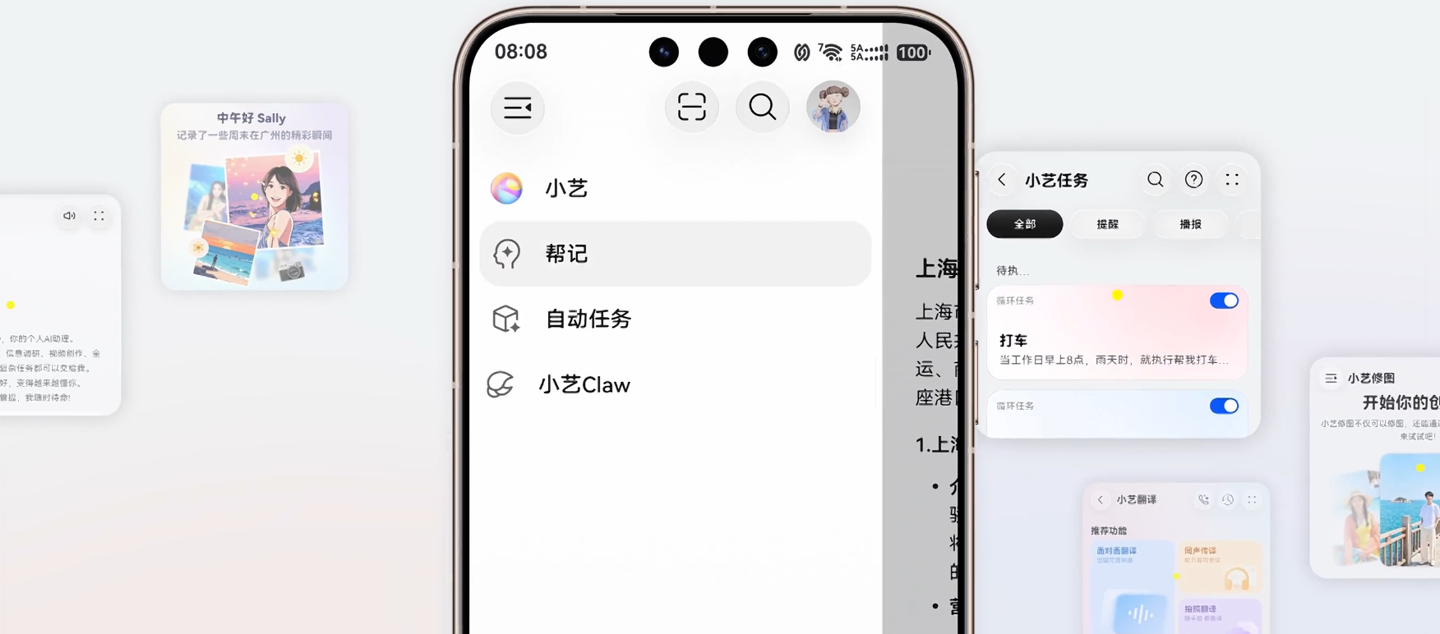
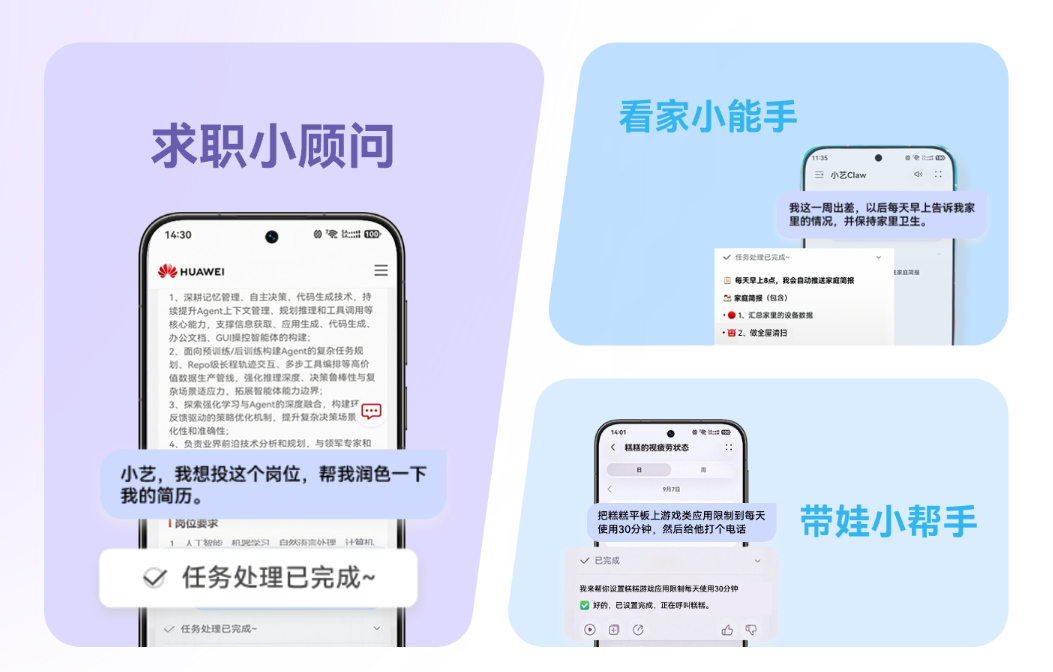
It presents a shift toward agents as the larger HarmonyOS 7 change. AI is described as built into the system base. With HarmonyOS Agent Framework 2.0 and planning split between the device and the cloud, the success rate on complex tasks is put above 90 percent. The system agent XiaoYi is said to draw on more than 200 system-level data items and to call more than 2,100 system capabilities, moving interaction from the user finding an app toward the system acting on intent.
On Mate 90 Pro Max and higher models already on sale, the report says a 30-billion-parameter multimodal model runs locally. Photo editing, speech transcription, and one-sentence video generation stay on the device, work without a network, and do not upload photos or call data. Pulling down on a long article or guide can start XiaoYi notes that sort the content; the feature is said to cover more than 50 frequently used news, social, and shopping apps. On a booking page, a XiaoYi bar can fill in saved passenger details.
Under the Xingdun security architecture, HarmonyOS 7 is said to recognize, during a call, AI-altered voices, overseas call forwarding, and scam scripts. The article says the system has identified several million fraud risks and blocked 10 million malicious app installations. It does not give the period or the method behind those totals.
The Mate X8 foldable, announced the same day, is described as putting HarmonyOS work on spatial interaction and large-screen use into a product. The article does not name the OS version on the Mate X8. It says XiaoYi meeting notes use voiceprints and long-range pickup to separate speakers and draft minutes, and that a virtual touchpad maps distant corners of the open screen into one-handed reach, alongside grip sensing, multi-window views, and a thinner body.

Apps and developers
The report says early HarmonyOS work concentrated on basic adaptation, while more partners now use underlying capabilities for functions that are not straight ports. It says more than 23,000 apps have taken part in ecosystem innovation, partners have contributed more than 160 capabilities, and those capabilities are reused by thousands of apps.
Named cases include:
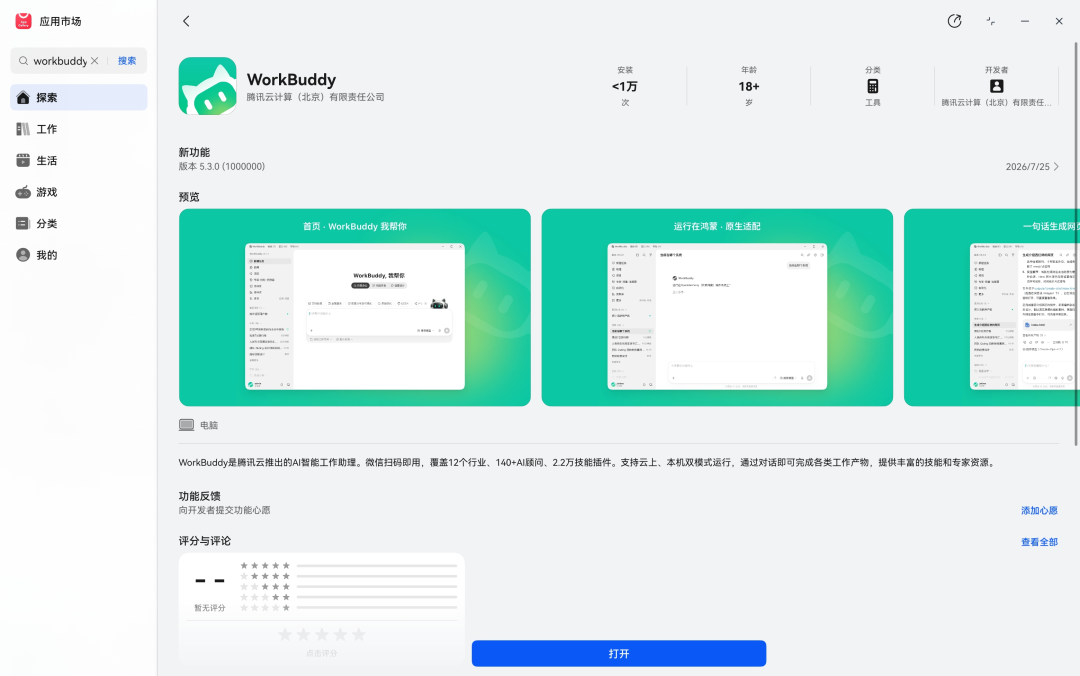
- Tencent formed a dedicated team and adapted more than 60 products. WorkBuddy uses a tap gesture to move a conversation record between devices.
- Jianying (CapCut) uses one development base across phone, tablet, and computer, so footage just shot on a phone can be sent to a PC with a tap. In 2026 it shipped 11 HarmonyOS versions and passed 20 million downloads.
- Alipay connected to the opened Xingdun anti-fraud platform. When the system detects a risk signal, the app shows a warning and asks for a second check. The article says this lowered fraud losses but gives no figure.
- On PCs, WPS, DingTalk, and ZWCAD are cited as professional software now available, which the report says supports office and industrial-design use.
HarmonyOS 7 is said to expose lightweight on-device 3D Gaussian splatting as a system interface. With the Ark graphics engine and the NPU, an ordinary phone is claimed to build a 3D model of a physical object in three to five minutes. Dianping is described as turning a restaurant into a walkable 1:1 3D space; JD.com as showing products in 3D; Amap as navigation in which sound follows the route; and Kugou as a customizable 12-track spatial audio field. The health app Xiaoka Health is said to use 3D reconstruction and a feature called a flash-control ball so a photo of a meal can estimate volume and calories.
The article says DevEco Code and DevEco CLI, AI tools across the development chain, lower the barrier to building apps, and that an AI fault locator built on thousands of failure patterns shortens diagnosis from days to minutes. It says more than 650 universities offer more than 800 HarmonyOS-related courses, nearly 9,000 students have explored agents and multi-device use in campus contests, and the Hongtu and Tiangong programs are aimed at open-source and AI work.
How the 100 million mark is framed
Huawei vice chairman and rotating chairman Xu Zhijun has compared a user base on the order of 100 million to the speed at which an aircraft leaves the ground. The November 24 announcement is a device count, not a separate user total. The article treats 100 million devices as the point at which users, developers, and hardware makers can keep the ecosystem going without continual outside support. That conclusion is the outlet’s.
It says some functions were shaped by user requests, including per-app volume control and 3D spatial capture later used by homestay operators. It also says the larger base gives partners a clearer commercial return, including when big companies ship new features on HarmonyOS first and smaller teams see stronger willingness to pay. It does not publish revenue or retention figures for that claim.
The piece calls 100 million devices an early step and expects the ecosystem story to grow as multi-device AI spreads. That expectation is an outlook, not a reported result.