A year-long Ookla study found that several North American cities had weak indoor mobile signals compared with other cities surveyed worldwide. The findings were reported on November 17, 2026.
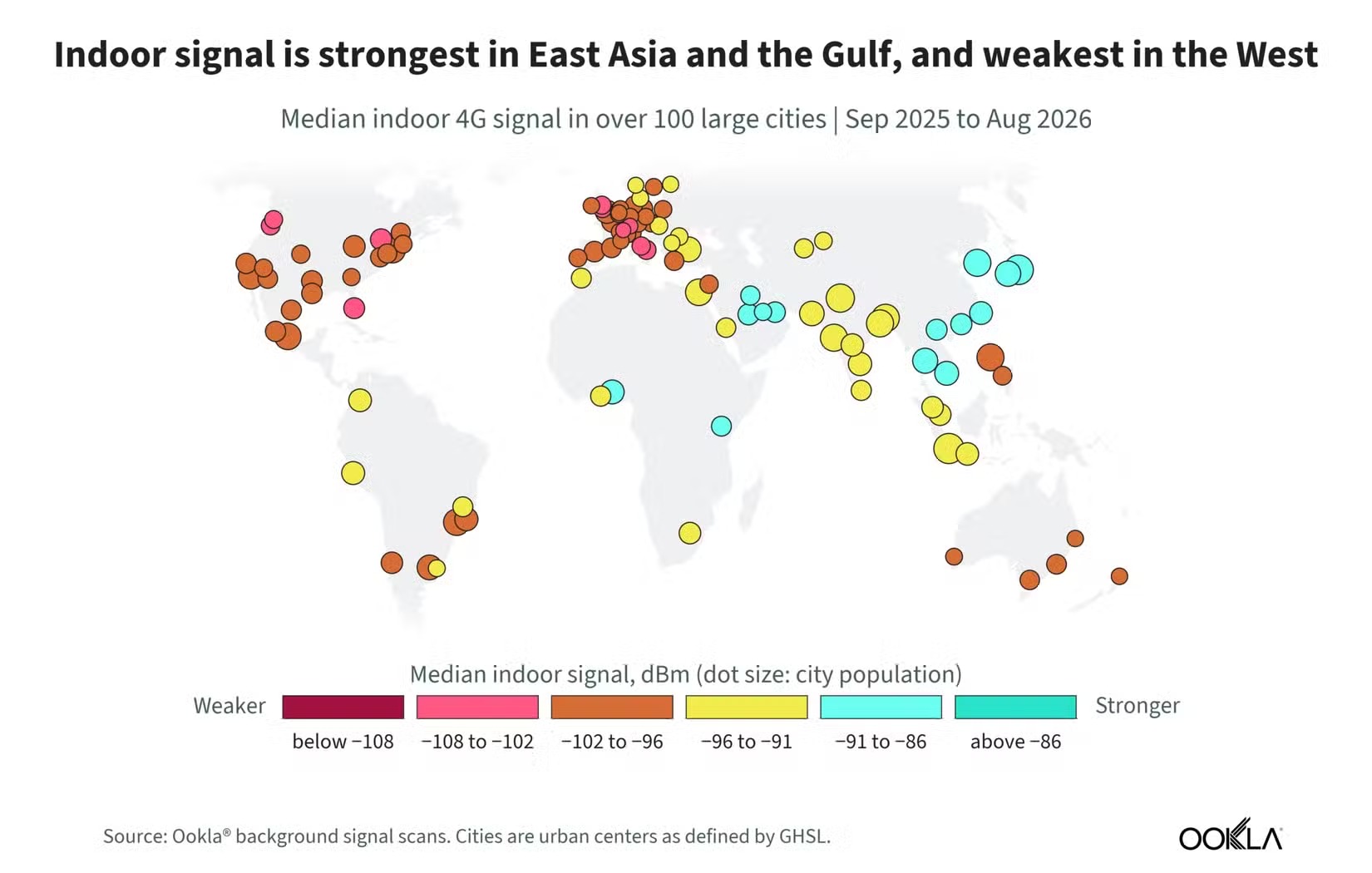
The study measured indoor phone signal strength in more than 100 cities across 60 countries. Cities in East and Southeast Asia and the Gulf region recorded the strongest indoor signals, while cities in Europe, North America and Oceania generally fell below the study’s average. Among the North American cities surveyed, Miami performed worst, followed by Vancouver and Seattle.
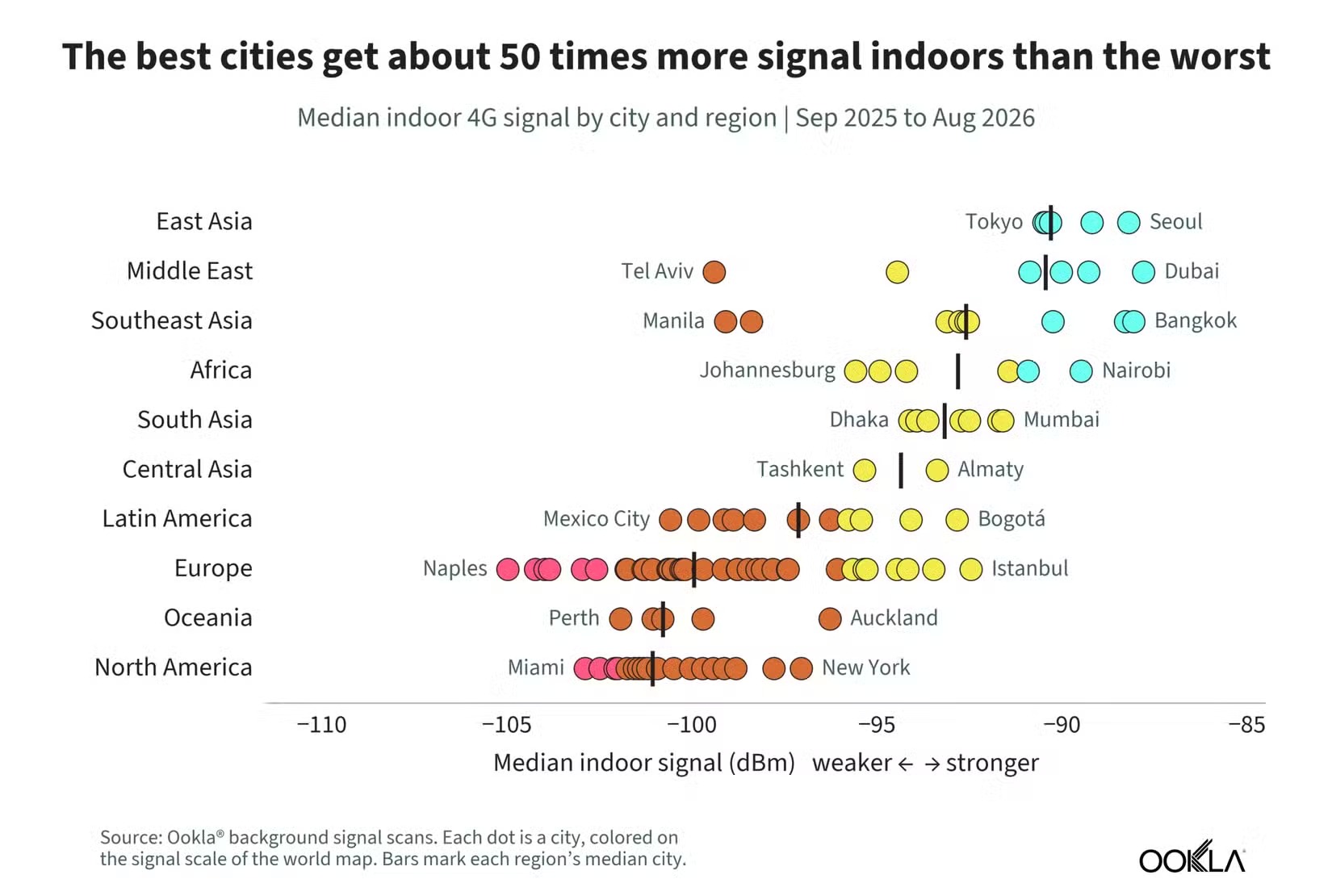
Ookla reported a 17 dBm difference in median indoor signal strength between the best- and worst-performing cities—equivalent to roughly a 50-fold difference in signal power. The measure describes signal strength, not a direct comparison of download speeds.
Building materials can weaken mobile signals, but Ookla found that the drop in strength from outdoors to indoors in North American cities was among the smallest in its study. That suggests weaker outdoor signals, rather than building penetration alone, may help explain their indoor results. Ookla also said mobile operators often estimate indoor coverage instead of measuring it extensively on site.
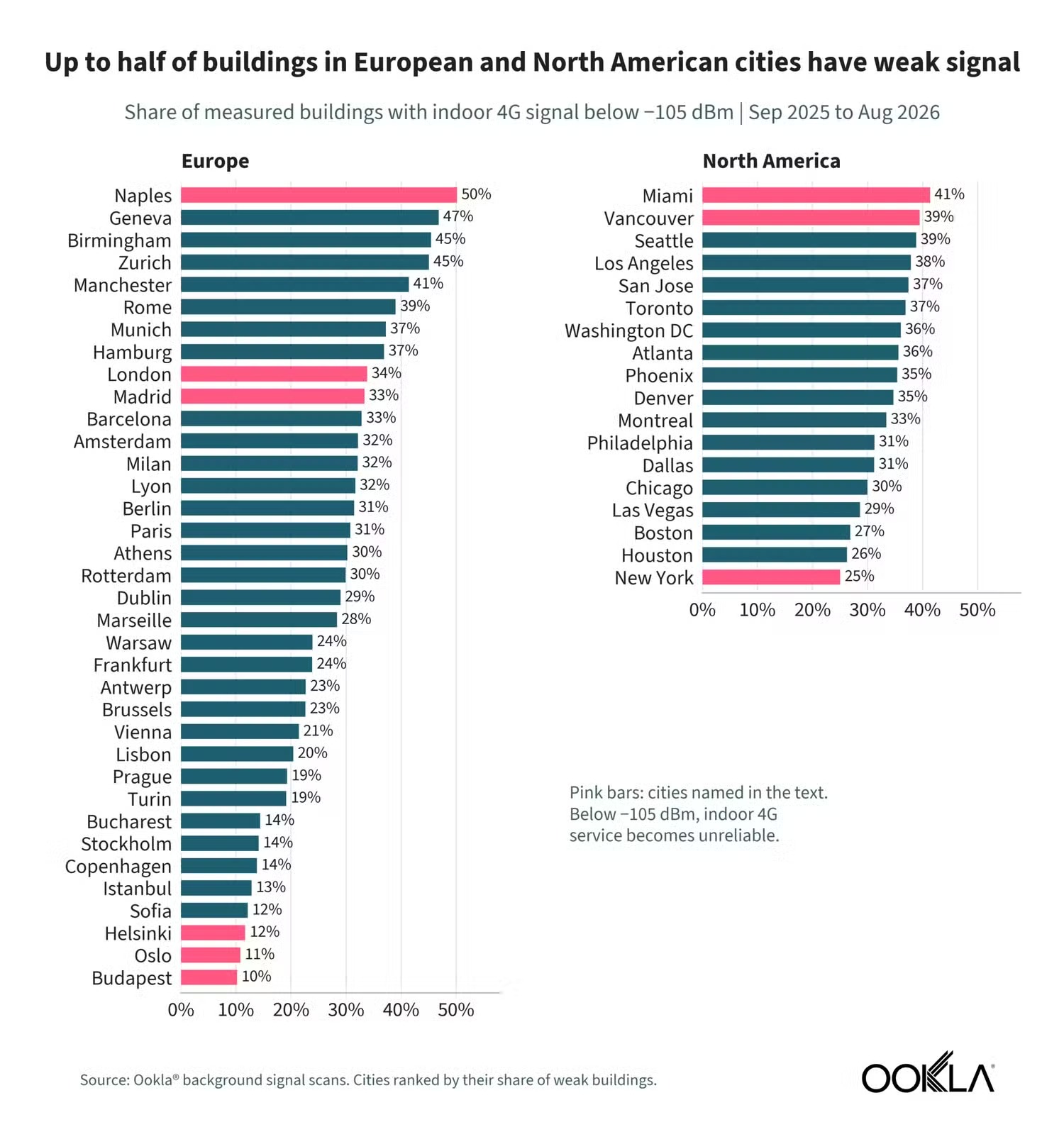
The distinction matters when Wi-Fi is unavailable and a phone must rely on 4G or 5G. Ookla warned that improvements to building insulation could make indoor mobile coverage more challenging in the future.